
Hi Angel’s Working on Earth Family!
Make Food Labels Work for You!
Today, we will review the importance of knowing how to read food labels. Understanding how to read food labels can be your best friend when it comes to choosing the right foods for your diet! Look for options that give you the nutrients you want more of and limit the ones you’d rather avoid. Here are some friendly tips:
- Go for foods that are richer in dietary fiber, vitamin D, calcium, iron, and potassium.
- Try to pick items that are lower in saturated fat, sodium, and added sugars.
Making these healthier choices can help you lower the risk of health issues like high blood pressure, heart disease, osteoporosis, and anemia. Happy eating!
Let’s Learn How to Read a Food Label
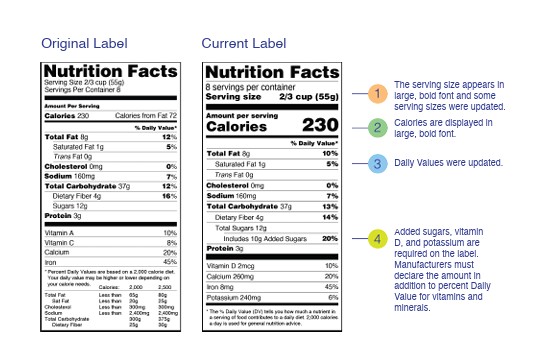
The serving sizes and servings per container are now easier to read because they use larger, bolder fonts that capture your attention. These updated sizes reflect what people typically eat and drink, making them more relatable. Keep in mind that a serving size is merely a helpful guideline and not a strict rule! Everyone’s nutritional needs differ, so listen to your body and decide what feels right for you.
The nutrition information on a Nutrition Facts label usually shows details for one serving, but you might also find information for the whole container on some packages. It’s always a good idea to check so you know what you’re getting!
Just a friendly reminder: one package might have more than one serving, so be sure to check it out! Enjoy!
Calories
To inspire your journey towards wellness, calories are now highlighted in big, bold letters for quick reference. While a general guideline for daily calorie intake is around 2,000, remember that your unique needs may vary based on age, sex, height, weight, and activity level. Discover what’s best for you by exploring https://www.myplate.gov/myplate-plan.
Understanding Daily Value
Embracing the % Daily Value empowers you to see how each nutrient in a single serving enriches your daily diet.
A %DV of 20% or more indicates that the nutrient is considered high!
If you come across a %DV of 5% or less, it indicates that the nutrient is considered low. It’s important to pay attention to this, especially when you’re trying to make informed choices about your nutrition.
What’s New with Nutrients? Some updates have been made to food labels! For starters, calories from fat are no longer required because research indicates that the type of fat you eat is more important than just the total amount. Additionally, you won’t see vitamins A and C listed as mandatory anymore since deficiencies in these vitamins are quite uncommon now. However, if a product does include them, you might still spot them on the label since some companies choose to showcase them!
We hope this helps you make informed choices! Enjoy your meals!
Always With Love!